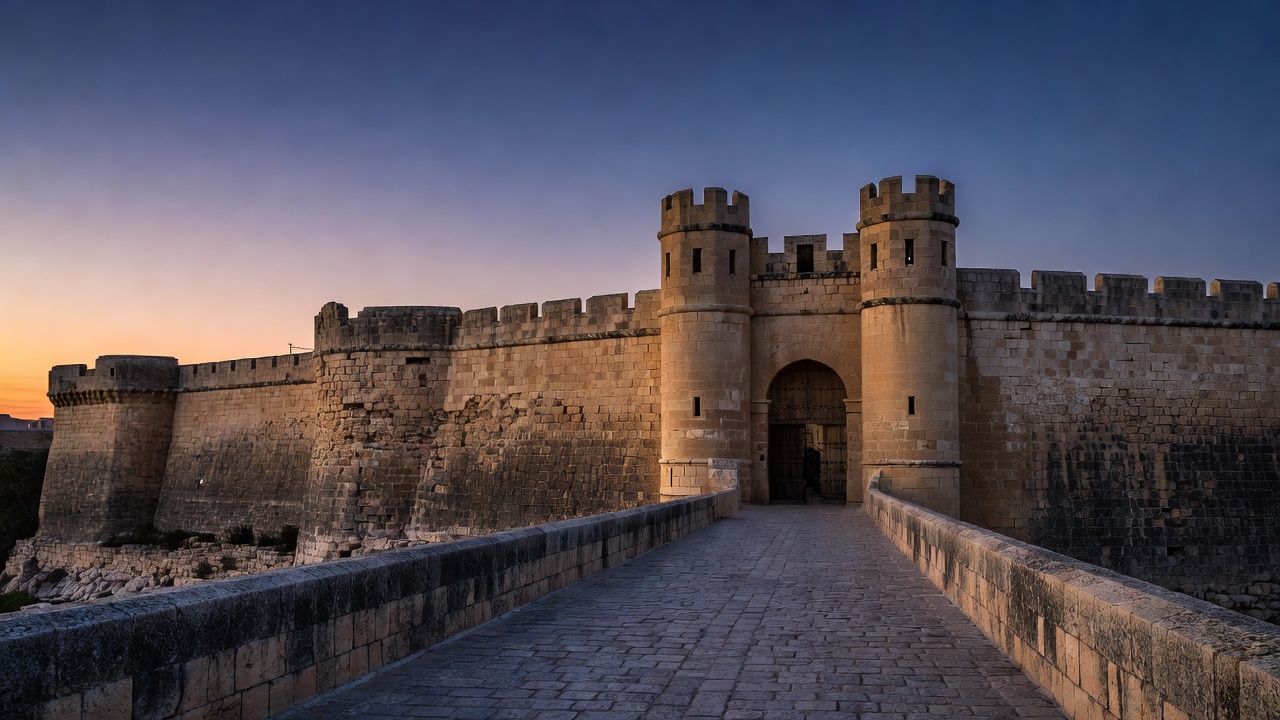
The Timeless Charm of the "Silent City"
Founded originally by the Phoenicians around 700 BC as Maleth and later fortified by the Romans under the name Melite, Mdina took its current fortified footprint during Arab rule in the 9th century. Today, only official resident vehicles are permitted through its monumental Baroque gates, preserving an extraordinary atmosphere of peaceful tranquility.
1. Walking the Norman & Baroque Alleys
As you wander Mdina’s narrow, winding sandstone streets, you will encounter magnificent Norman and Sicilian palaces such as Palazzo Falson (The Norman House) and the grand Cathedral of St. Paul with its twin bell towers designed by architect Lorenzo Gafà. At night, lantern-lit alleys cast dramatic shadows against the warm limestone, making evening walks unforgettable.
2. Rabat & The Roman Domus
Directly outside Mdina's defensive moat lies the vibrant village of Rabat (meaning 'suburb' in Arabic). Here you can explore the Domus Romana, a remarkably preserved 1st-century BC Roman aristocratic residence containing exquisite Hellenistic mosaics that rival those found in Pompeii.
3. St. Paul’s & St. Agatha’s Catacombs
Descending below Rabat reveals extensive subterranean Roman burial networks from the 3rd to 8th centuries AD. The catacombs feature unique triclinia (circular stone agape dining tables) carved directly from the living rock, where early Christian families gathered for ceremonial commemorative meals.
4. Sunset at Dingli Cliffs
Just a 5-minute drive from Rabat brings you to Dingli Cliffs, the highest geographic point in the Maltese Islands (253 meters above sea level). Overlooking the uninhabited islet of Filfla, it offers one of the most stunning Mediterranean sunset viewpoints in Southern Europe.